




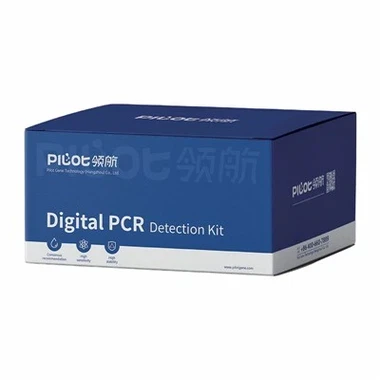




Digital PCR (dPCR) is a technique that divides the PCR reaction system into a large number of tiny reaction units (such as droplets, microchambers, etc.), ensuring that each unit contains only 0, 1 or a few target molecules. Then, each unit is independently amplified and the number of positive units is counted, thereby achieving absolute quantification of the target nucleic acid molecules.
-
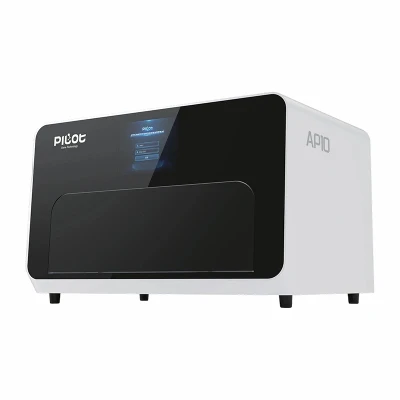
![AD3207 Automated Droplet Digital PCR System]() AD3207 Automated Droplet Digital PCR SystemThe AD3207 is a fully automated droplet digital PCR system designed for high-sensitivity detection of single-copy genes and accurate quantification of pathogens and viral loads. With 7...
AD3207 Automated Droplet Digital PCR SystemThe AD3207 is a fully automated droplet digital PCR system designed for high-sensitivity detection of single-copy genes and accurate quantification of pathogens and viral loads. With 7... -
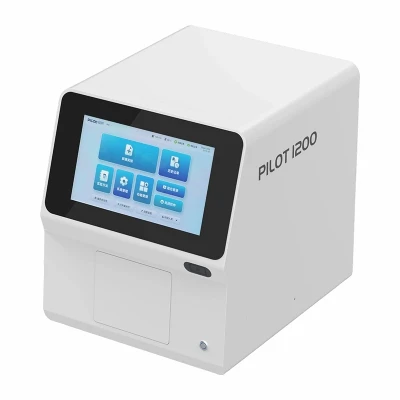
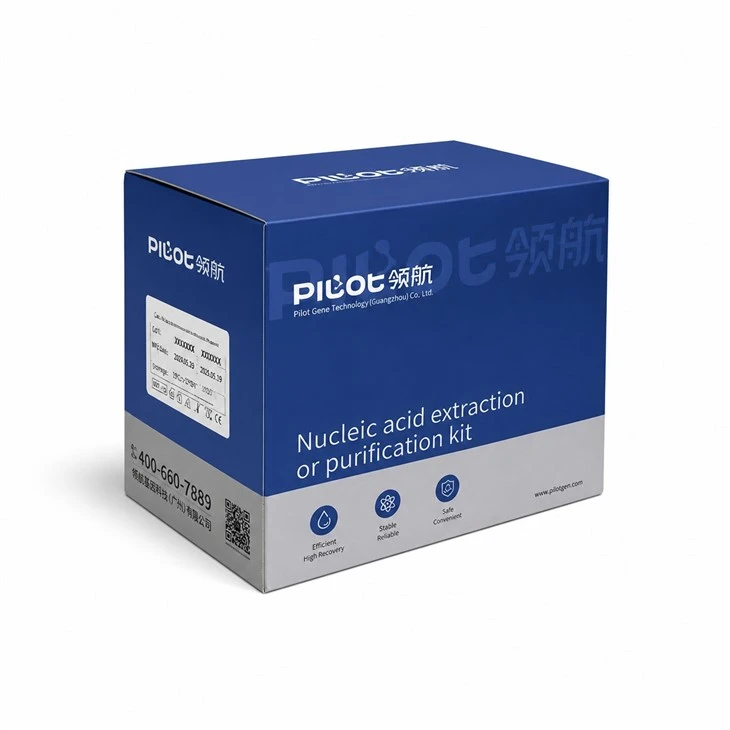
![Pilot1200 All-in-one Digital PCR Instrument]() Pilot1200 All-in-one Digital PCR InstrumentThe Pilot1200 is the world's first sample‑to‑answer digital PCR system—fully automated and fully integrated, combining nucleic acid extraction, reaction setup, and digital PCR detection in a...
Pilot1200 All-in-one Digital PCR InstrumentThe Pilot1200 is the world's first sample‑to‑answer digital PCR system—fully automated and fully integrated, combining nucleic acid extraction, reaction setup, and digital PCR detection in a... -
![D3200 Droplet Digital PCR System (China Only)]() D3200 Droplet Digital PCR System (China Only)As our inaugural commercial digital PCR system, the D3200 set the standard for performance and reliability in the Chinese market. It comprises three separate, purpose‑built instruments: the DG32...
D3200 Droplet Digital PCR System (China Only)As our inaugural commercial digital PCR system, the D3200 set the standard for performance and reliability in the Chinese market. It comprises three separate, purpose‑built instruments: the DG32...


FAQ
Q: What are the advantages of digital PCR compared to qPCR?
A: Core Advantages of Digital PCR over qPCR
The Five Core Advantages of Digital PCR
These advantages all stem from its fundamental principle of ""partitioning"" and ""endpoint absolute counting.""
1. Absolute Quantification Without a Standard Curve
2. Ultra-High Sensitivity and Rare Variant Detection
3. Superior Precision and Reproducibility
4. Greater Tolerance to PCR Inhibitors
5. Independence from Amplification Efficiency
Q: Digital PCR, qPCR, and blood culture for the comparison in the detection of bloodstream infections
A:
| Feature | Digital PCR | qPCR | Blood Culture |
| Core Principle | Endpoint absolute nucleic acid counting | Real-time relative nucleic acid quantification | Microbial growth and cultivation |
| Detection Target | Pathogen-specific nucleic acids (DNA/RNA) | Pathogen-specific nucleic acids (DNA/RNA) | Viable, culturable microorganisms |
| Turnaround Time | Fast (Our TAT 3 hours) | Fast
But Filmarray BCID2 is based on positive blood culture |
Slow (2-5 days, avg. 24-48 hrs) |
| Sensitivity | Exceptionally High (single-copy level) | High | Lower (requires >10-100 CFU/mL) |
| Quantification | Absolute (copies/mL) | Relative (Ct value, needs standard curve) | Semi-quantitative (time-to-positivity, colony count) |
| Effect of Antibiotics | No Effect (detects nucleic acid from dead/live organisms) | No Effect (detects nucleic acid from dead/live organisms) | Severe Impact (prior antibiotics can cause false negatives) |
| Inhibitor Tolerance | Excellent, highly tolerant to blood inhibitors | Weaker, susceptible to blood inhibitors | N/A, but subject to microbial inhibition |
| Pathogen Coverage | Targeted, requires known sequence | Targeted, requires known sequence | Broad-spectrum, unbiased, can detect unknown/rare pathogens |
| Primary Clinical Value | Early, precise, quantitative diagnosis | This technology is most widely applied in scenarios based on positive blood culture samples. | Definitive diagnosis & therapeutic guidance (Gold Standard, Slow) |
As one of the leading digital PCR manufacturers and suppliers in China, we offer a wide range of products with superior quality. Please feel free to wholesale custom made digital PCR from our factory. Contact us for more details.
Multiplex Digital PCR, digital pcr multiplex, digital pcr


