








Multiplex Digital PCR (dPCR) represents a significant advancement in the field of molecular biology, offering distinct advantages over traditional Polymerase Chain Reaction (PCR). As a supplier of Multiplex Digital PCR solutions, I am excited to delve into the differences between these two technologies and highlight the unique benefits that Multiplex Digital PCR brings to the table.


Principles of Traditional PCR and Multiplex Digital PCR
Traditional PCR is a well - established technique used to amplify specific DNA sequences. It relies on the exponential amplification of target DNA using primers, DNA polymerase, and nucleotides. The reaction occurs in a single tube, and the amplification is monitored in real - time or end - point. The amount of amplified DNA is estimated based on the cycle threshold (Ct) value in real - time PCR, which is the number of cycles at which the fluorescence signal crosses a predefined threshold.
On the other hand, Multiplex Digital PCR partitions the sample into thousands or millions of individual reactions. Each partition acts as an independent mini - reaction chamber. The sample is diluted such that some partitions contain the target DNA molecule, while others do not. After amplification, the partitions are analyzed to determine the presence or absence of the target DNA. By counting the number of positive and negative partitions, the absolute quantity of the target DNA can be calculated using Poisson statistics.
Precision and Sensitivity
One of the most significant differences between Multiplex Digital PCR and traditional PCR lies in their precision and sensitivity. Traditional PCR is semi - quantitative, meaning it can only provide relative quantification of the target DNA. The Ct value is affected by various factors such as the efficiency of the PCR reaction, the quality of the sample, and the presence of inhibitors. This can lead to variability in the results, especially when comparing samples from different sources or experimental conditions.
Multiplex Digital PCR, however, offers absolute quantification. Since it counts the number of positive and negative partitions, it is not affected by the reaction efficiency. This makes it highly precise, even at low target concentrations. For example, in applications such as detecting rare mutations or measuring low - abundance transcripts, Multiplex Digital PCR can detect targets that may be missed by traditional PCR.
Multiplexing Capability
Another key difference is the multiplexing capability. Traditional PCR can typically amplify only one or a few targets in a single reaction. This is because the primers and probes used for different targets can interfere with each other, leading to non - specific amplification or reduced efficiency.
Multiplex Digital PCR, as the name suggests, can simultaneously detect multiple targets in a single reaction. This is achieved by using different fluorescent dyes for each target. Each partition can then be analyzed for the presence of different targets based on the fluorescence signal. This multiplexing capability is particularly useful in applications such as gene expression profiling, pathogen detection, and cancer biomarker analysis, where multiple targets need to be detected simultaneously.
Tolerance to Inhibitors
Traditional PCR is highly sensitive to the presence of inhibitors in the sample. Inhibitors can reduce the efficiency of the PCR reaction, leading to false - negative results or inaccurate quantification. These inhibitors can be present in biological samples such as blood, tissue, or environmental samples.
Multiplex Digital PCR is more tolerant to inhibitors. Since the sample is partitioned into many small reactions, the effect of inhibitors is diluted. Even if some partitions are affected by inhibitors, the unaffected partitions can still provide accurate quantification of the target DNA. This makes Multiplex Digital PCR a more robust technique for analyzing complex samples.
Applications
The differences between Multiplex Digital PCR and traditional PCR also translate into different applications. Traditional PCR is widely used in routine molecular biology applications such as gene cloning, genotyping, and basic gene expression analysis. It is a cost - effective and relatively simple technique for detecting and amplifying DNA.
Multiplex Digital PCR, on the other hand, is particularly useful in applications that require high precision and sensitivity. For example, in cancer research, it can be used to detect rare somatic mutations in tumor samples. In infectious disease diagnosis, it can be used to detect low - level pathogens in clinical samples. In environmental monitoring, it can be used to detect and quantify microorganisms in water or soil samples.
Our Multiplex Digital PCR Solutions
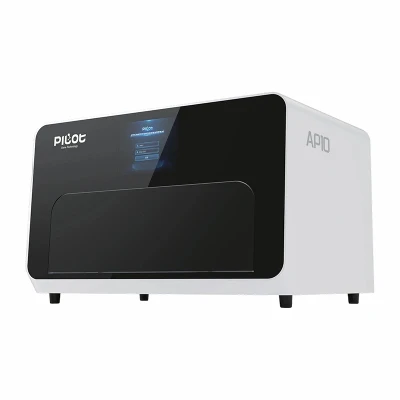
As a supplier of Multiplex Digital PCR solutions, we offer a range of high - quality products to meet the diverse needs of our customers. Our D3200 Droplet Digital PCR System (China Only) is a state - of - the - art instrument that provides accurate and reliable digital PCR results. It features a high - throughput design, allowing for the analysis of multiple samples simultaneously.
The AD3207 Automated Droplet Digital PCR System is an automated solution that streamlines the digital PCR workflow. It reduces the hands - on time and human error, making it ideal for high - volume laboratories.
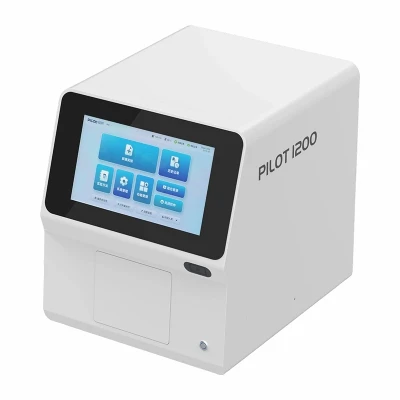
Our Pilot1200 All - in - one Digital PCR Instrument is a compact and user - friendly instrument that combines all the necessary functions for digital PCR analysis. It is suitable for both research and clinical applications.
Conclusion
In conclusion, Multiplex Digital PCR offers several advantages over traditional PCR, including higher precision, better sensitivity, multiplexing capability, and greater tolerance to inhibitors. These features make it a powerful tool for a wide range of applications in molecular biology, medicine, and environmental science.
If you are interested in learning more about our Multiplex Digital PCR solutions or would like to discuss your specific needs, we encourage you to contact us for a procurement consultation. Our team of experts is ready to assist you in finding the best solution for your research or diagnostic requirements.
References
- Hindson, B. J., Ness, K. D., Masquelier, D. A., Belgrader, P., Heredia, N. J., Makarewicz, A. J., … & Efcavitch, J. W. (2011). High - throughput droplet digital PCR system for absolute quantification of DNA copy number. Analytical chemistry, 83(22), 8604 - 8610.
- Vogelstein, B., & Kinzler, K. W. (1999). Digital PCR. Proceedings of the National Academy of Sciences, 96(16), 9236 - 9241.
- Pinheiro, J. B., & Scherer, S. E. (2012). Digital PCR: an emerging technology for more sensitive molecular diagnostics. Expert review of molecular diagnostics, 12(5), 507 - 516.

